scene portal
Aesthetic interactions
spring 2026
This final project challenged us to design a working interface that showcased the interface design principles we’d developed throughout the semester.
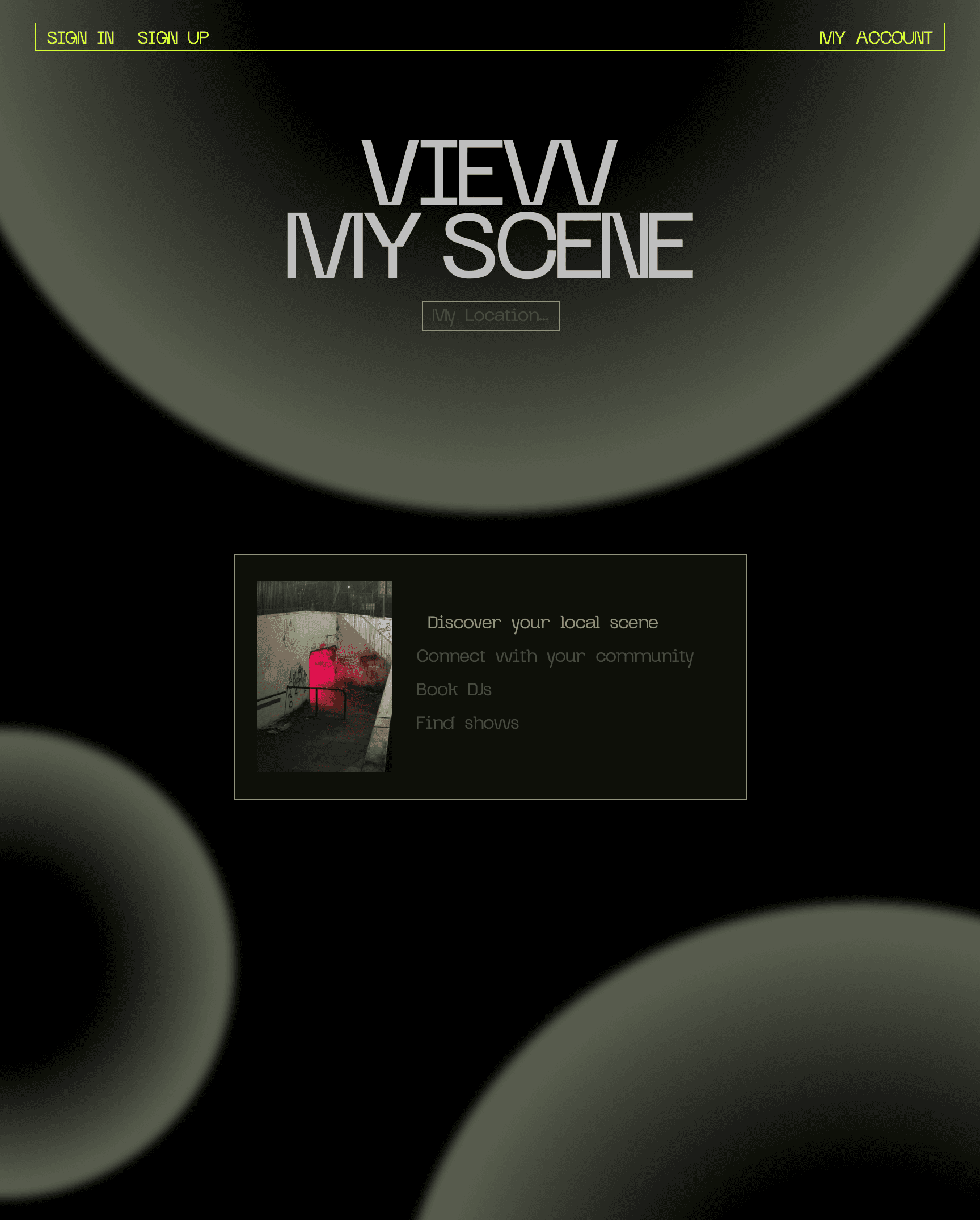
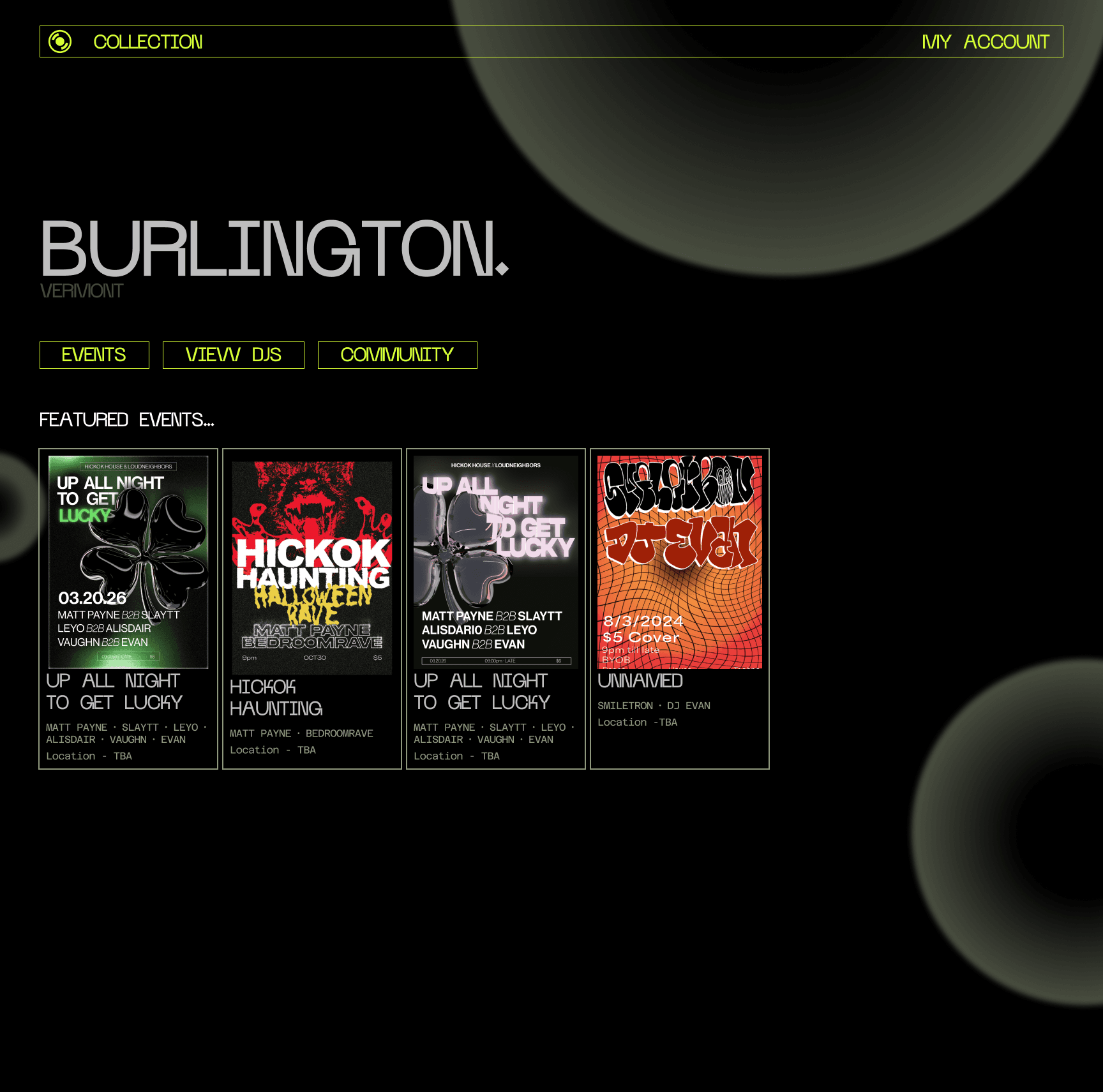
I wanted to use these principles to spotlight a subculture I think often goes overlooked: underground music scenes. Information about these scenes is notoriously hard to find and navigate. Scattered across Instagram accounts, Facebook groups, event apps, and word of mouth, with no single place to go for a clear picture of what’s happening. Scene Portal centralizes that information and access into one interface, while preserving the raw, hidden aesthetic that makes these scenes feel authentic in the first place.
SITE SPREADS



PITCH DECK


Walkthrough
APPROACH
My process began with identifying my target audience, which I approached by breaking down the three core functions I wanted Scene Portal to serve:
Finding local underground events
Finding and booking local underground DJs
Connecting with the local underground music community
This led me to define a broad target audience: anyone actively trying to engage with their local underground music scene, whether as an attendee, a performer, or someone just trying to find their way in.
From there, I researched existing event and DJ platforms to understand how they addressed these needs and where they left gaps for a site like mine to fill:
RA Guide offers strong access to underground techno events but has minimal community features.
Eventbrite provides broad access to events and communities but lacks depth in any single one.
GigSalad and Thumbtack have well-developed DJ booking flows, but their algorithms favor popularity and mainstream genres over diversity, leaving niche and underground artists underserved.
After analyzing these adjacent platforms against the needs of my target audience, I found that no single existing tool addressed all three core functions in one place — and none preserved the raw, DIY aesthetic that gives underground scenes their identity. Most either sanitized the experience into something more mainstream, or left users to piece together information across disconnected apps, social media, and word of mouth. I set out to design something that closed those gaps: a unified interface for finding events, booking DJs, and connecting with the community, without losing the underground feel that makes these scenes worth seeking out in the first place.
Mood Board
My mood board centered on a palette of acid green, black, and white. Using hazy event photography to highlight the dark, immersive feel of underground spaces. I drew heavily from glitch and terminal aesthetics like dot-matrix textures, monospace type, and retro computer UI elements, to give the interface a slightly back-end tech feel that mirrors how these scenes actually communicate. Together, these influences steered the design away from the polished, corporate look of platforms like Eventbrite or even RA guide, and toward something grittier and more atmospheric.
